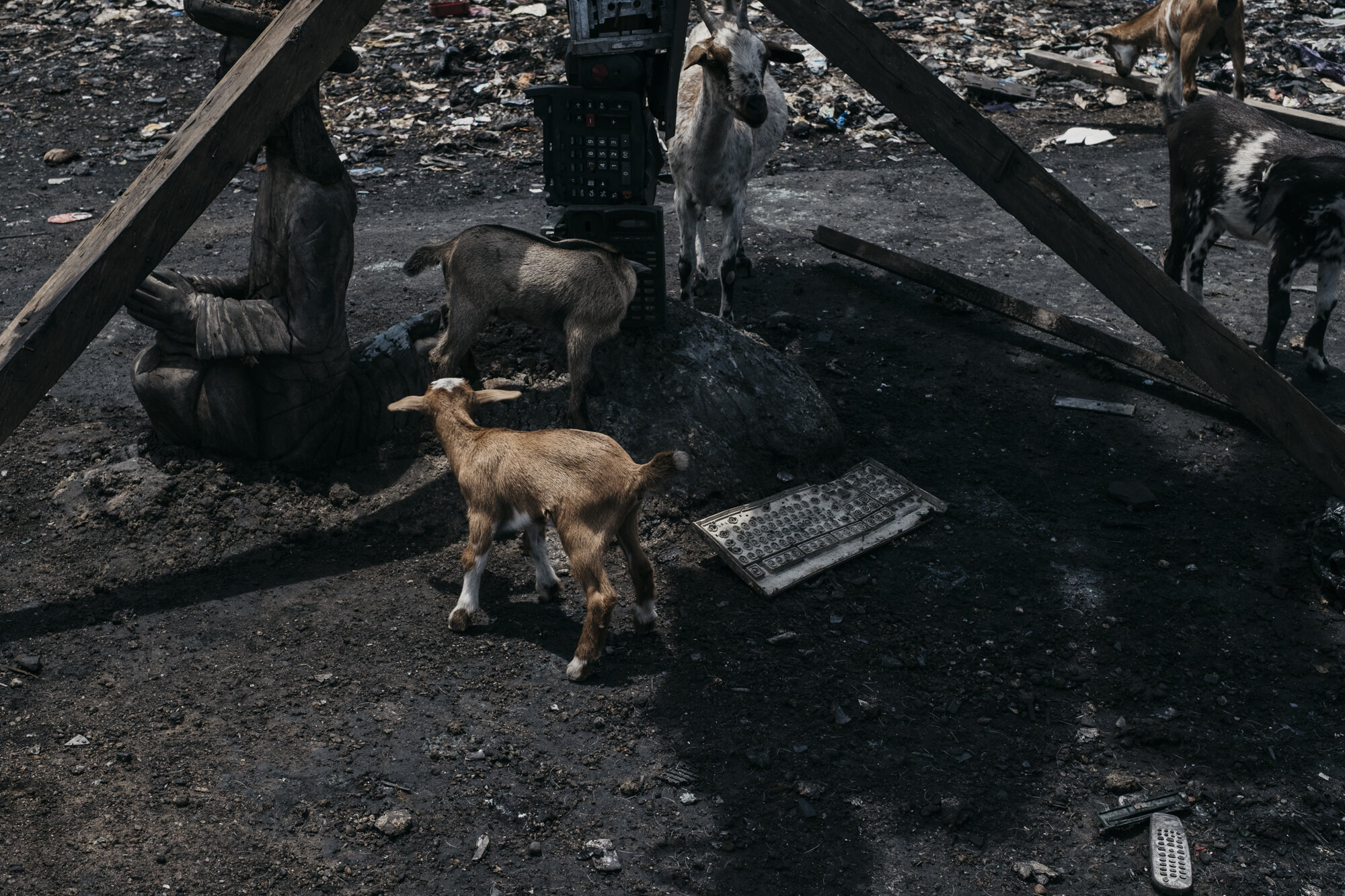
Waste as far as the eye can see. 6,000 people work but the smell of death brought by corpses
of animals is omnipresent. I see herds of thinned cows and goats looking for food. But there is not a single blade of green in this apocalyptic place.
Under a blazing sun, a polluted air, men work 6 days a week, dismantling computers, taking apart fridges, freezers, cars, motorbikes, buses, with the intention of reselling them for an average daily salary of 20 to 40 cedis (3 to 6€) the most valued metals such as aluminium and copper.
The youngest of these extreme workers burn the cables in order to extract the copper, usually after 3pm, in order to "protect" the adjacent market from the ultra toxic fumes. I try to catch their eyes. I see weariness, despair, aggression, madness. Contact and conversation are difficult. Indeed, toxic gases cause strong neurological damage.
The river Odaw, which runs through the dump, is partly covered by mountains of rubbish. I walk on the river as on quicksand. The water brings arsenic, lead, mercury and cadmium to the deeply polluted water tables.
According to the organisation "Pure Earth" Agbogbloshie would be the most polluted place on Earth. But Agbogbloshie is also
a place to live. Entire families live there. Children play in the rubbish. Women, often with their
Babies on their backs perform the least skilled tasks, such as selling food and drink. A German NGO trains these young women to turn computers and smartphones into second-hand equipment. for the Ghanaian market.
I am struck by the creative potential of Ghanaians. They are creating and producing new objects from the destroyed like a motorcycle-truck to transport the sorted waste and thus facilitate their work.
Agbogbloshie keeps on growing. In spite of agreements prohibiting the entry of this electrical and electronic waste and In Ghana, around 40,000 tonnes per container per year come into the country each year, coming from mainly from the Netherlands. Corruption and the disguising of waste as second-hand materials for the local market, bypasses the agreements signed between Ghana and many of the countries exporting these products waste.
Our need to consume beautiful electronic objects in immaculate packaging, our desire irrepressible to buy, to replace equipment, which is often still functional, the will to buy at most the need for survival of Ghanaians who have been forced to make a living from their low prices, sets in motion a mechanism of destruction. awareness of the harmful impact on the environment but have little choice.
We live in a visual society. Through my images, I wish to show the impact of our futile desire to consume which generates a polluted and unattractive landscape, always far from our eyes.
We have given in to the sirens of ease. The act of buying has been dematerialised, but matter exists and at the end of its life it reaches Agbogbloshie.